
Stumped by Tree Troubles? We're Here for You! - Get Your FREE Estimates!

Stumped by Tree Troubles? We're Here for You! - Get Your FREE Estimates!


 By
Big Easy Tree Removal
By
Big Easy Tree Removal  Oct 22, 2025
  0 Comments
 Tree trimming controls a tree’s shape, size, and appearance by cutting back overgrown branches, while pruning targets dead, diseased, or structurally weak limbs to protect long-term health and safety. In New Orleans, LA, both services are essential for preparing trees for hurricane season and managing year-round subtropical growth. Big Easy Tree Removal provides trimming and pruning for residential and commercial properties across the Greater New Orleans area.
If you own a home or commercial property in New Orleans, you have probably heard the terms “trimming” and “pruning” used interchangeably. They are not the same thing. Each serves a distinct purpose, and knowing the difference helps you make better decisions about the live oaks, crepe myrtles, and magnolias that line streets from Uptown to Lakeview. With humidity levels that rarely drop below 70 percent and a hurricane season stretching from June through November, trees in Southeast Louisiana face conditions that demand consistent, informed care. Big Easy Tree Removal helps property owners across the Greater New Orleans metro understand exactly what their trees need and when they need it.
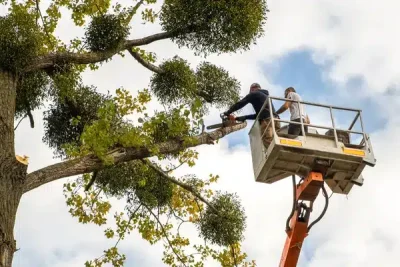
Trimming and pruning both involve cutting parts of a tree, but that is where the similarity ends. Understanding the goal, technique, timing, and outcome of each service will help you request the right one.
Trimming focuses on form and appearance, while pruning focuses on health and safety. Trimming keeps a tree looking neat and proportional by cutting back overgrown branches, while pruning removes dead, diseased, or poorly attached limbs that threaten the tree’s structure.
A well-trimmed tree adds curb appeal and keeps your property looking maintained. Pruning, on the other hand, addresses problems beneath the surface. A branch with fungal decay or a limb growing at a weak angle may look fine from the sidewalk but could fail during a summer thunderstorm. Pruning catches these issues early.
In New Orleans, where live oaks develop massive horizontal canopies and crepe myrtles grow aggressively in the warm months, both services play a role in responsible property maintenance.
Trimming uses broad, shaping cuts with tools like hedge trimmers and hand shears, while pruning requires precise, selective cuts made with loppers, pruning saws, and pole pruners to remove individual branches at specific points.
When trimming, the focus is on the outer canopy. Branches are cut back to a uniform length or shape, much like a haircut. The process is relatively fast and applies to the entire visible profile of the tree or shrub.
Pruning is more surgical. Each cut targets a specific branch for a specific reason, whether it is dead wood, a crossing limb that creates friction wounds, or a co-dominant stem that could split under load. The arborist evaluates the tree from trunk to canopy before making a single cut. This level of detail is especially important for mature live oaks in neighborhoods like the Garden District and Mid-City, where large limbs extend over rooftops, sidewalks, and parked cars.
Trimming can happen throughout the growing season, generally spring through fall in Louisiana, while pruning is most effective during dormancy in late winter or early spring when the tree is under less biological stress.
In Southeast Louisiana, the growing season is long. Trees push new growth from late February through October, which means trimming can be scheduled across a wide window. Most homeowners trim in late spring or early summer when rapid growth has made the canopy unruly.
Pruning during dormancy, typically January through early March in the New Orleans area, offers several advantages. Leafless canopies make structural flaws easier to spot, disease transmission risk drops because insects and fungi are less active, and the tree channels energy into healing wounds once spring growth begins. For oak species specifically, dormant-season pruning reduces the risk of oak wilt, a fungal disease that can spread through fresh cuts during warmer months.
Trimming delivers an immediate visual improvement by creating a tidy, balanced canopy, while pruning produces long-term health benefits by eliminating hazards and promoting stronger branch architecture over successive growth cycles.
After a trim, a property looks polished. Branches no longer hang over walkways or crowd gutters. After a pruning session, the results may be less visually dramatic, but the impact on the tree’s structural integrity and lifespan is significant. A properly pruned tree is better equipped to handle the 100-plus-mph wind gusts that Gulf Coast hurricanes can produce.
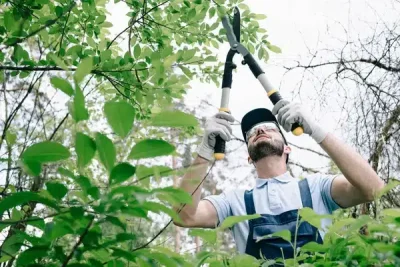
Regular trimming is a proactive step that protects property value, manages growth, and keeps your landscape looking its best. Here is why it matters for New Orleans properties.
A well-trimmed tree frames a home, opens sight lines, and signals to neighbors and potential buyers that the property is cared for. Overgrown canopies, by contrast, can make even a well-maintained house look neglected.
In historic neighborhoods like the French Quarter, Bywater, and Algiers Point, trees are part of the streetscape. A shapely crepe myrtle or a neatly maintained magnolia complements the architecture. Trimming shapes the canopy so that it enhances the property rather than overwhelming it.
Trimming also improves light penetration. In a city where shade is welcome but excessive moisture is not, allowing sunlight to reach lawns and garden beds helps reduce fungal growth and standing water issues.
Routine trimming prevents branches from encroaching on power lines, rooflines, fences, and neighboring properties. Without regular size control, trees can become liabilities rather than assets.
New Orleans sits below sea level in many areas, and Entergy Louisiana power lines run through dense residential canopy throughout Orleans and Jefferson Parishes. Untrimmed branches that contact power lines create fire hazards and service outages, especially during storm season. Keeping trees trimmed to a safe clearance protects your household and your neighbors.
Size control also matters for root management. Trees that grow unchecked above ground often expand just as aggressively below, which can damage the aging sewer and water infrastructure common in older New Orleans neighborhoods.
Consistent trimming on a scheduled cycle prevents the kind of heavy, corrective cutting that stresses trees and costs more. Small, regular cuts are healthier and more affordable than infrequent, drastic removals.
Think of trimming the way you think about gutter cleaning or pressure washing. Doing it regularly keeps small tasks small. Skip it for three or four years in the New Orleans climate, and you may be dealing with branches that have doubled in diameter, canopies blocking second-story windows, and root systems that have shifted foundations.
Pruning goes deeper than appearance. It addresses structural weaknesses, disease, and safety risks that trimming alone cannot solve.
Pruning removes dead, dying, and diseased wood before decay spreads to healthy tissue. It also thins the canopy to improve airflow, which is critical in a humid subtropical climate where fungal infections thrive.
New Orleans averages roughly 64 inches of rainfall per year, and summer humidity regularly exceeds 90 percent. These conditions promote fungal pathogens, bacterial leaf scorch, and insect infestations. Pruning opens the interior canopy so that air circulates freely, reducing the damp, stagnant conditions fungi need to establish.
Removing diseased branches promptly also prevents pathogens from migrating to the trunk or root system, where treatment becomes far more difficult and expensive. For tree preservation, early pruning intervention is one of the most effective strategies available.
Selective pruning eliminates weak branch unions, co-dominant stems, and crossing limbs that create stress points. Over time, this produces a balanced canopy that distributes weight evenly and resists storm damage.
A co-dominant stem, where two main leaders grow at a narrow angle from the same point, is one of the most common structural defects in urban trees. The narrow crotch traps bark and moisture, weakening the attachment point. During high winds, this is often where failure occurs. Pruning one of the competing leaders while the tree is young prevents a catastrophic split decades later.
This kind of structural work is especially important in parishes along Lake Pontchartrain and the Mississippi River, where wind exposure during tropical systems can be severe.
Dead or weakened limbs that hang over homes, driveways, sidewalks, and utility lines are a direct threat to people and property. Pruning removes these hazards before they become emergencies.
After every major storm in the New Orleans metro, fallen limbs account for a large share of property damage claims. Many of these failures are preventable. A limb that has been dead for two years becomes brittle and is far more likely to snap than a healthy, flexible branch of the same size.
Proactive pruning before hurricane season, combined with regular trimming, is the most reliable way to reduce storm-related tree damage on your property.
New Orleans is not a standard market for tree care. The combination of subtropical climate, hurricane exposure, historic tree canopy, and aging infrastructure makes proactive maintenance a necessity rather than a preference.
Live oaks along St. Charles Avenue and throughout Audubon Park have canopies spanning 80 to 100 feet. These trees can live for centuries, but only with consistent structural pruning. Crepe myrtles, among the most common ornamental trees in Jefferson and Orleans Parishes, need annual trimming to prevent dense, top-heavy growth that snaps in summer storms.
Louisiana soil conditions add another layer of complexity. The clay-heavy, often saturated ground in many New Orleans neighborhoods provides less root anchorage than well-drained soils. A tree with a poorly balanced canopy or excessive deadwood is more likely to topple when the ground is waterlogged during heavy rains. Trimming and pruning reduce canopy weight and wind resistance, giving roots a better chance of holding firm.
Seasonal timing also differs from recommendations you might find in national gardening guides. Because Louisiana’s dormant period is short (roughly mid-December through mid-February), the pruning window is compressed. Scheduling work early is important, and waiting until a named storm is in the Gulf is too late. Reputable tree services book out quickly as June approaches.
Not every trimming or pruning job requires calling in help. Small ornamental shrubs and low branches are manageable for most homeowners with basic hand tools. However, there are clear situations where you should contact a licensed, insured tree service.
If you are unsure whether your trees need trimming, pruning, or something more involved like tree removal, a qualified arborist can assess the situation and recommend the right approach. Call Big Easy Tree Removal at 504-732-1166 for a consultation.
Keeping your trees trimmed and properly pruned protects your home, your family, and your investment. Whether you need seasonal shaping for overgrown branches or targeted pruning to address storm-readiness, Big Easy Tree Removal has the equipment, licensing, and local knowledge to handle the job safely.
We serve New Orleans, Gretna, Slidell, Metairie, Kenner, Covington, Mandeville, Hammond, River Ridge, and throughout Louisiana.
Request your free estimate today or call 504-732-1166 to get started.
Pruning is more important for storm readiness because it removes structurally weak branches and reduces canopy weight. Trimming helps with clearance around rooflines and power lines, so most New Orleans homeowners benefit from both services before June.
Most trees in the New Orleans area benefit from trimming once or twice per year during the growing season and a thorough pruning every one to three years during dormancy. Fast-growing species like crepe myrtles and water oaks may need more frequent attention.
Small shrubs and low branches under 10 feet are generally safe for homeowners to handle with hand tools. Any work involving ladders, chainsaws, or proximity to power lines should be performed by a licensed and insured tree service.
Late January through early March is the ideal pruning window for most tree species in Southeast Louisiana. The trees are dormant, disease vectors are less active, and the bare canopy makes structural issues easier to identify.
Yes. Big Easy Tree Removal provides both trimming and pruning services for residential and commercial properties across the Greater New Orleans metro, including Orleans Parish, Jefferson Parish, St. Tammany Parish, and Tangipahoa Parish.

We’re grateful for all feedback. Here is what our Big Easy Tree Removal customers are saying:


